Southern Cross Laser & Sheet Metal provides tube laser cutting in Sydney for complex profiles, helping projects shift into assembly with fewer delays.
Complex profiles are where conventional tube preparation can become slow and inconsistent. Our tube laser cutting turns approved digital geometry into repeatable cut features, giving Sydney fabricators components prepared for efficient fit-up and assembly.
How Does Tube Laser Cutting Prepare Complex Profiles for Assembly?
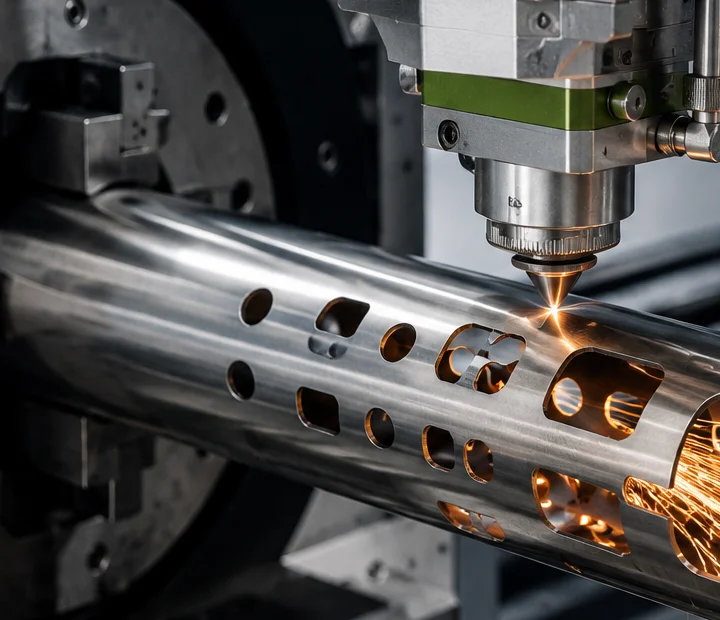
Tube laser cutting can create holes, slots, mitres and shaped end cuts within one programmed process. The practical result is a tube component that arrives with key geometry already cut, reducing the need to mark out and perform several separate operations before fit-up.
That does not mean every part is automatically assembly-ready. Material, profile size, wall thickness, tolerance, drawing quality and downstream work still affect the outcome. We review the supplied files and requested scope before quoting so cutting, fabrication, and any other required work are not confused.
Which Tube Features Can Be Combined in One Cut Program?
A clear drawing lets us assess whether multiple features can be produced during tube laser cutting. Common project requirements include:
- Mitres and end profiles: Cut joining angles and shaped ends from the approved geometry, reducing manual trimming before tube sections move into fit-up.
- Holes and slots: Position openings for fasteners, fixtures or access points during the programmed cut, limiting separate marking and drilling operations.
- Tabs and locating features: Add assembly references that support repeatable positioning, making matching sections easier to align and check before joining.
- Notches and intersecting profiles: Prepare connection areas for crossing or adjoining tube sections where the submitted design requires more than a straight end cut.
- Repeated components: Use the approved file to produce consistent geometry across prototypes, production batches and repeat orders while the drawing revision remains current.
What Information Is Required for Accurate Tube Laser Cutting?
For an actionable review, send us the current CAD file or fabrication drawing, material specification, profile dimensions, wall thickness, quantity and required tolerances. Our laser cutting quote checklist explains why quantity, grade, thickness and downstream work belong in the enquiry.
The Welding Institute’s free laser cutting guide explains that CNC or G-code controls the motion used to follow the required pattern. Accurate digital geometry is therefore fundamental to the cut, but it does not replace project-specific checks on material, tolerance, profile and downstream fabrication.
How Laser Tube Cutting Reduces Fit-Up Delays
Consistent component geometry can make frames and fabricated assemblies easier to locate, check and join. It may also reduce manual trimming where holes, slots and end profiles have been incorporated correctly into the approved cut file. The commercial gain is not a vague promise of “precision”; it is fewer avoidable touchpoints between raw tube and the next fabrication stage.
Our Sydney workshop combines laser cutting with custom sheet metal fabrication. That wider capability is relevant when a project includes tube parts alongside brackets, panels or other fabricated components, although each requested process must be confirmed in the quotation.
Request a Project-Specific Laser Tube Cutting Quote
Tube laser cutting is worth specifying when complex profiles, repeat quantities or reduced secondary handling can improve the production sequence.
Upload your latest CAD file or drawing through our project enquiry page with the profile size, wall thickness, material, quantity and required date. We can then identify missing details and prepare a project-specific quote without forcing you through a generic sales call.